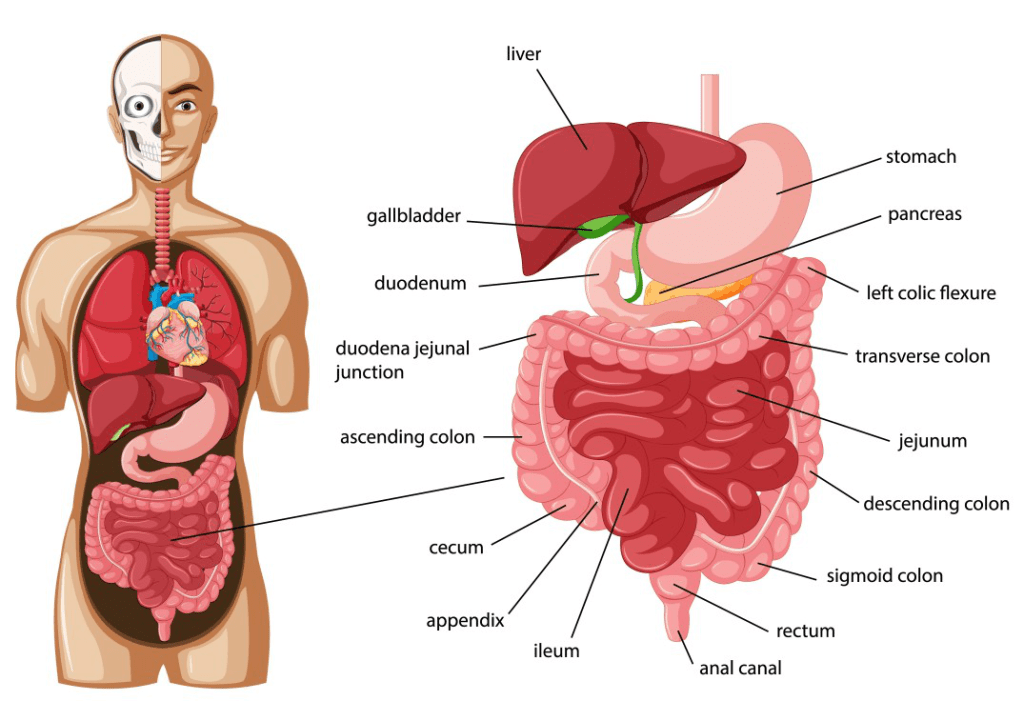
The digestive system in humans is a complex system responsible for breaking down food into nutrients that can be absorbed and utilized by the body. It includes the following organs and structures:
Mouth: Food is broken down into smaller pieces by the teeth and mixed with saliva, which contains enzymes that start the process of digestion.
Esophagus: The esophagus is a muscular tube that connects the mouth to the stomach. It uses rhythmic contractions to move food down to the stomach.
Stomach: The stomach is a muscular sac that mixes food with digestive juices, including hydrochloric acid and enzymes, to break it down into a liquid form.
Small intestine: The small intestine is a long, narrow tube where most of the absorption of nutrients takes place. The walls of the small intestine are lined with tiny finger-like projections called villi, which increase the surface area for absorption.
Pancreas: The pancreas produces digestive enzymes that are released into the small intestine to further break down food.
Liver: The liver produces bile, which is stored in the gallbladder and released into the small intestine to help digest fats.
Large intestine: The large intestine, or colon, is responsible for absorbing water and electrolytes from the remaining digested material before it is eliminated from the body as feces.
Rectum and anus: Feces are stored in the rectum until they are eliminated through the anus during a bowel movement.
The digestive system is regulated by a complex network of nerves, hormones, and other signaling molecules, which work together to control the movement of food through the system and the release of digestive enzymes and juices. Proper digestion is important for maintaining overall health and well-being, and a balanced diet rich in nutrients is essential for optimal digestive function.
 Okay Ai
Leave a comment