The brain is a complex organ that is responsible for controlling and coordinating all of the body’s functions. It is located in the skull and is protected by the bony structure of the cranium. The brain consists of three main parts: the cerebrum, the cerebellum, and the brainstem.
The cerebrum is the largest part of the brain and is responsible for many of the body’s voluntary actions, such as movement, speech, and conscious thought. It is divided into two hemispheres, the left and the right, which are connected by a band of nerve fibers called the corpus callosum.
The cerebellum is located at the base of the brain and is responsible for coordinating movement and balance. It receives sensory information from the body and uses it to regulate and adjust movement.
The brainstem connects the brain to the spinal cord and is responsible for controlling many of the body’s automatic functions, such as breathing, heart rate, and digestion. It also serves as a relay center for sensory and motor information between the brain and the rest of the body.
The brain is made up of billions of neurons, which are specialized cells that transmit electrical and chemical signals. These neurons form complex networks that allow the brain to process and integrate information from the environment and from within the body. The brain is also protected by the blood-brain barrier, which helps to regulate the flow of substances in and out of the brain to maintain its proper function.
Brain parts:
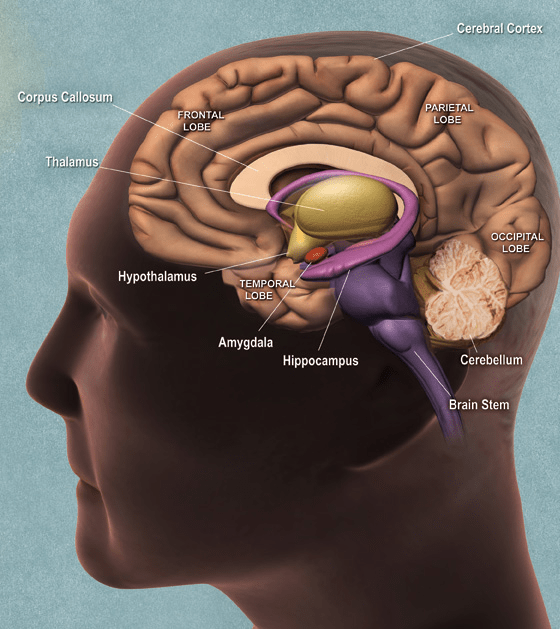
The brain is a complex organ that can be divided into several distinct parts, each with its own specialized functions. Here’s a brief overview of the different parts of the brain:
Cerebrum: The cerebrum is the largest part of the brain and is responsible for many of the body’s conscious and voluntary actions, such as movement, speech, and conscious thought. It is divided into two hemispheres, the left and right, which are connected by a band of nerve fibers called the corpus callosum. The cerebrum is further divided into lobes, including the frontal lobe, parietal lobe, occipital lobe, and temporal lobe, each of which has specific functions.
Cerebellum: The cerebellum is located at the base of the brain and is responsible for coordinating movement and balance. It receives sensory information from the body and uses it to regulate and adjust movement.
Brainstem: The brainstem connects the brain to the spinal cord and is responsible for controlling many of the body’s automatic functions, such as breathing, heart rate, and digestion. It also serves as a relay center for sensory and motor information between the brain and the rest of the body. The brainstem includes the midbrain, pons, and medulla oblongata.
Thalamus: The thalamus is a small, egg-shaped structure in the center of the brain that acts as a relay center for sensory information. It receives sensory signals from the body and sends them to the appropriate areas of the brain for processing.
Hypothalamus: The hypothalamus is a small, but vital structure located just below the thalamus that regulates many of the body’s vital functions, including hunger, thirst, body temperature, and the sleep-wake cycle. It also controls the release of hormones from the pituitary gland.
Amygdala: The amygdala is a small, almond-shaped structure in the temporal lobe that is involved in processing emotions, particularly fear and aggression.
Hippocampus: The hippocampus is a seahorse-shaped structure in the temporal lobe that is involved in the formation and retrieval of memories.
These are just a few of the many different parts of the brain, and each plays an essential role in maintaining the body’s overall function. The brain is a complex and dynamic organ, and researchers are constantly learning more about how it works and how to keep it healthy.
Structure of brain:
The brain is a complex organ that can be divided into several different structures and regions, each with its own specialized functions. Here’s an overview of the different structures that make up the brain:
Cerebrum: The cerebrum is the largest part of the brain and is divided into two hemispheres, the left and the right. It is responsible for many of the body’s voluntary and conscious actions, such as movement, speech, and thought. The cerebrum is further divided into lobes, including the frontal lobe, parietal lobe, occipital lobe, and temporal lobe, each of which has specific functions.
Cerebellum: The cerebellum is located at the back of the brain, beneath the cerebrum. It is responsible for coordinating movement and balance.
Brainstem: The brainstem is the lower part of the brain that connects to the spinal cord. It is responsible for controlling many of the body’s automatic functions, such as breathing, heart rate, and digestion.
Thalamus: The thalamus is a small, egg-shaped structure in the center of the brain that acts as a relay center for sensory information.
Hypothalamus: The hypothalamus is a small, but vital structure located just below the thalamus that regulates many of the body’s vital functions, including hunger, thirst, body temperature, and the sleep-wake cycle. It also controls the release of hormones from the pituitary gland.
Pituitary gland: The pituitary gland is a small, pea-sized gland located just below the hypothalamus. It is often called the “master gland” because it produces hormones that control the function of other glands in the body.
Limbic system: The limbic system is a group of structures in the brain that are involved in regulating emotions and memory. It includes the amygdala, hippocampus, and several other structures.
Corpus callosum: The corpus callosum is a band of nerve fibers that connects the two hemispheres of the brain and allows them to communicate with each other.
These are just a few of the many structures that make up the brain. The brain is a complex and dynamic organ, and researchers are constantly learning more about its structure and function.
 Okay Ai
Leave a comment